Fun Facts About Memorial Day
Inspirational, Motivational, and Heartwarming Stories

Photo Credit: Bruce Tuten via CC Flickr
Memorial day, here in America, is a solemn and somber day in America in which people from around the country can stop, remember, and thank the men and women who have fought and have given parts of their lives for our freedom.
It was once said that Freedom is a lot like oxygen: when you have it, nobody notices it…but go without it, and, wow, do you wish you had it!! It is SO true!
Even though I have celebrated Memorial Day every year since I was a kid, I was wondering the other day…what is the truth and facts behind this hallowed day? In today’s blog, I decided to find out and then, let you know by sharing my findings with you!
Enjoy!
- Memorial Day originally started during the Civil War.
- Approximately 750,000 Americans died in the Civil War which made it the deadliest war in American history (just for the record, there were more deaths in the Civil War than all of the other wars combined).
- Memorial Day used to be known as Decoration Day and was meant to honor both the Union and Confederate men who lost their lives during the Civil War. By the 1900’s it became a day to celebrate and remember all of the soldiers who died in the military.
- One of the earliest ceremonies honoring the fallen was organized by freed slaves!
- Memorial Day actually didn’t become an official federal holiday until 1971.
- In 1966, President Lyndon Johnson named Waterloo, New York, as the official birthplace of Memorial Day.
- According to custom, the American flag is to fly at half staff until noon, and then raise it to full staff until sunset.
- In 1915, a Georgian school teacher named, Moina Michael, began a movement to make the Red Poppy the national symbol of tribute to veterans and for “keeping the faith with all who died.” The idea of wearing Red Poppies originated from a poem written in 1915, by John McCrae, “In Flanders Field.”
- It is common for volunteers to place American flags on the graves in the national cemeteries.
- It has been estimated that 30-35 million people travel by car over the Memorial Day Weekend.
The Young Sentinel and Mr. Lincoln
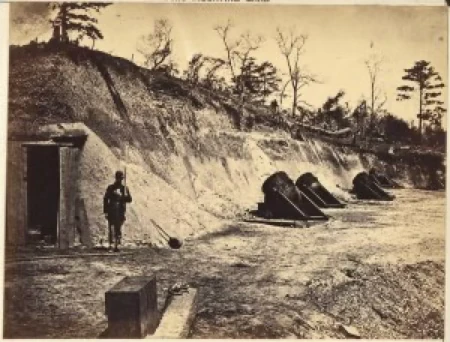
Photo Credit: John Wood via Wikimedia
Since today is Memorial Day, I thought it would be nice to find a story of an unsung hero of a war and share it with you. The story I found for today’s article was written and adapted by Z.A.Mudge and took place in the Civil War. It involved a young Civil War soldier and a President that some of us may know…President Abraham Lincoln.
In the summer of 1862, a young man belonging to a Vermont regiment was found sleeping at his post. He was tried and sentenced to be shot. The day was fixed for the execution, and the young soldier calmly prepared to meet his fate.
Friends who knew of the case brought the matter to Mr. Lincoln’s attention. It seemed that the boy had been on duty one night, and on the following night he had taken the place of a comrade too ill to stand guard. The third night he had been again called out, and, being utterly exhausted, had fallen asleep at his post.
As soon as Mr. Lincoln understood the case, he signed a pardon, and sent it to the camp. The morning before the execution arrived, and the President had not heard whether the pardon had reached the officers in charge of the matter. He began to feel uneasy. He ordered a telegram to be sent to the camp, but received no answer. State papers could not fix his mind, nor could he banish the condemned soldier boy from his thoughts.
At last, feeling that he MUST KNOW that the lad was safe, he ordered the carriage and rode rapidly ten miles over a dusty road and beneath a scorching sun. When he reached the camp he found that the pardon had been received and the execution stayed.
The sentinel was released, and his heart was filled with lasting gratitude. When the campaign opened in the spring, the young man was with his regiment near Yorktown, Virginia. They were ordered to attack a fort, and he fell at the first volley of the enemy.
His comrades caught him up and carried him bleeding and dying from the field. “Bear witness,” he said, “that I have proved myself not a coward, and I am not afraid to die.” Then, making a last effort, with his dying breath he prayed for Abraham Lincoln.
May We Never Forget…the unsung heroes.
Secure
Willie Watson, 6/23/2025
It is normal to want to feel “secure” as we go about life. It is okay to have bad days. God understands our humanity and still speaks to us with words of comfort at any time.
“Secure” implies that we are able to face life as it comes, and, knowing that God is present in our lives as believers in Christ, and will provide whatever we need. We will have good days and bad days. God will sustain us through them all.
Being “secure” eliminates fear, and the anxiety that accompanies it. And, if we want that feeling of security that only comes from God, we must walk in integrity or live without compromise or corruption. When challenges wound our faith, Jesus meets us with compassion and willingness to help us being secure; Jesus restores our faith with His healing presence and life-giving words. Jesus makes it possible for us to believe again, and to know with deep assurance, “everything is possible for one who believes in Him”
For some, that sounds impossible when we think about our past attempts to honor God in all things we do. We want to be an example to others as Jesus was: A witness of God’s grace, a helper to those in need, a friend to the lonely, and an encourager to the sick and suffering in this world.
But we allow things to get in our way, and we “fall short” of who God wants us to be, and who we, in fact, want to be. And therein lies the secret: It’s all about what we desire.
In fact, affliction often draws even the unsaved to the Lord. They would never have come when things are going well, but many do come in times of sorrow or rejection or when they are forced to the end of their resources.
If our innermost desires is to bring all of our life into harmony with God’s words, His will and His ways, and if we consciously submit our lives to Him and live for Him, God will give us His security.
We have nothing to fear, if our deepest desire is to know God and make Him known. Nevertheless, the present seems to be a joyous time to feel “secure” as we go about life in the presence of God.
Thank you very much for letting me share with you my newly inspirational speech titled “secure”.
Willie Watson
A Gentle King Who Makes Peace
Centuries before Jesus, the prophet Zechariah had spoken to a defeated, downtrodden Israel, promising a king who would come not in power or might but humbly, on a donkey. That king would establish peace, not by force, but by the Spirit.
When the crowds welcomed Jesus during his triumphal entry into Jerusalem, convinced He was this king, they hoped He would overthrow Rome and restore Israel’s independence. But Jesus didn’t meet their expectations. Instead of raising a sword, He surrendered peacefully. He endured mockery, injustice, and the cross with humility and love.
Jesus wasn’t just any king; He was the King who makes peace—peace between God and humanity and, through Him, peace among people. His kingdom isn’t about power plays or revenge but about reconciliation and grace.
Jesus’ gentle reign challenges us to love even our enemies, just as he loved us.
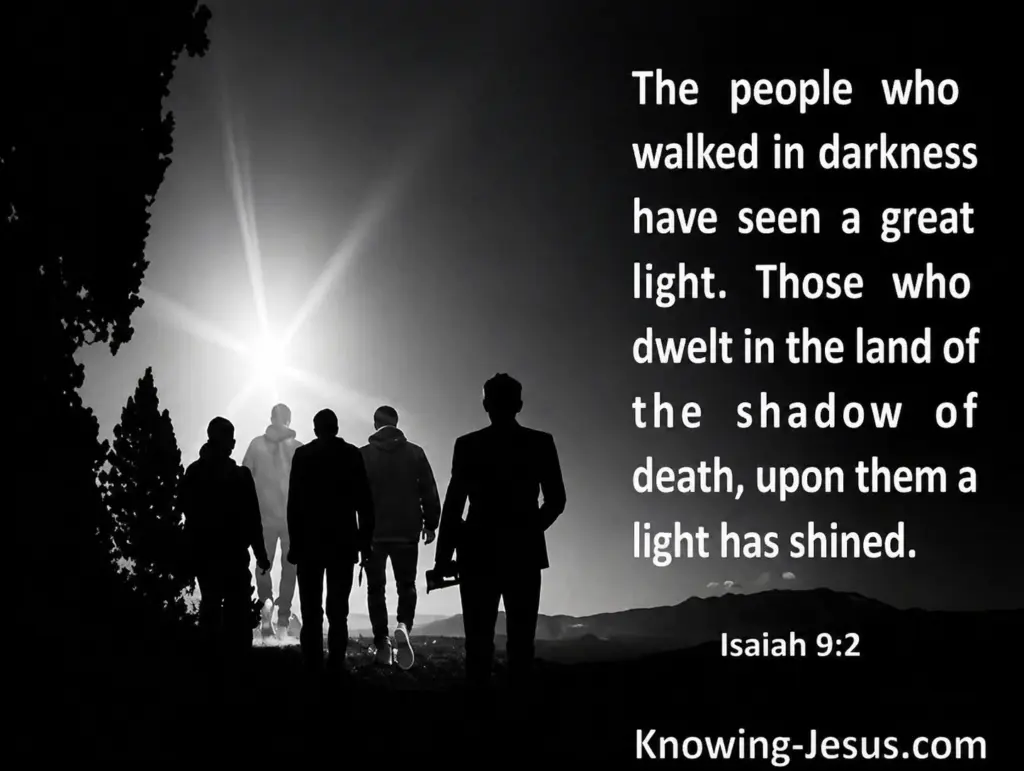
Don’t Be Afraid
If you have listened to my previous messages, you know I like to begin with a story. So, here’s one for today:
Once upon a time, a little girl went on a trip to a foreign country. Somehow, she wandered off and found herself lost in a thick jungle. She had no idea how to get out. She asked the locals for directions on how to get out, but their instructions only made her more confused and afraid.
Then she remembered her dad. To her, he was a hero—part Rambo, part Superman, part Chuck Norris—and she trusted him more than anyone. She quickly video-called him and said, “Dad, I’m lost in the jungle.”
Without hesitation, he said, “I know exactly where you are. I am very familiar with that area. Don’t be afraid. I am going to tell you how to get out of there. All you need to do is go up the hill, and at the top, you will see a gate called trust. Open it, walk through, and you’ll be safe.”
Now she faced a choice. The locals insisted, “That what her dad said won’t work—They even said they’ve tried it before.” But in her heart, she had to decide: should she trust the voices around her, or trust the one voice she knew loved her?
We’ll come back to her story later. But today, I want us to examine times when God says those exact words to us: Don’t be afraid.
Interestingly, the phrase “Fear Not” is written in the King James Version of the Bible approximately 70 to 100 times, depending on how variations are counted. However, the broader message of God telling people not to fear is much more widespread, with thousands of instances and related themes throughout the scriptures. So, depending on the version of the Bible you are reading, you may see different variations of the phrase, fear not or do not be afraid.
With so many examples, I was unsure which ones to include and where to start, and a voice said to me, Start at the beginning.
So, let’s begin with the Old Testament, in Genesis Chapter 15.
But, before we get to that, here is the background. Earlier, in Genesis chapter 12, the Lord instructed Abram to leave the country of his relatives and go to a land that He would show him. And God told him that He would make a great nation out of him. Later, the Lord changed Abram’s name to Abraham. But for now, he is Abram. So, Abram believed in the Lord and did as he instructed. No questions asked. He trusted God. As we read further, in Genesis chapter 14, a war broke out in the region, and Sodom was plundered; Abram’s nephew Lot was taken captive along with the food supplies.
Now, they may have gotten away with it, except they made one mistake. They took Lot. So, when word came that Abram that Lot was taken, Abram chased them and brought back his nephew and all the other captives. The king of Sodom, who was also a priest, was pleased and prayed a blessing on Abram. He also offered Abram the goods he recovered, but Abram refused to accept anything from the king.
You see, the Lord had already told Abram he would make a great nation out of him. Abram trusted the Lord and would wait for him to work in his life. Let us pick up the story of God’s reassurance to Abram in Genesis 15. I will be using the New Living Translation (NLT).
Genesis 15:1-4
1 Some time later, the Lord spoke to Abram in a vision and said to him, “Do not be afraid, Abram, for I will protect you, and your reward will be great.”
2 But Abram replied, “O Sovereign Lord, what good are all your blessings when I don’t even have a son? Since you’ve given me no children, Eliezer of Damascus, a servant in my household, will inherit all my wealth.
3 You have given me no descendants of my own, so one of my servants will be my heir.”
4 Then the Lord said to him, “No, your servant will not be your heir, for you will have a son of your own who will be your heir.”
When Abram was afraid after a victory, God assured him that He would be his shield and his great reward, offering Himself as the ultimate fulfillment of his needs.
This vision is the prelude to God establishing a covenant with Abram, confirming His protection and outlining future blessings, including the promise of many descendants.
As we read further, the Lord told Abram to look outside and count the stars, if he could, and said that was the number of descendants he would have. However, at that time, Abram and his wife, Sarah, had no children. So, quite naturally, Abram asked God the question most of us would be thinking. He asked, what good would all your blessings be when I don’t even have a son to inherit them? It will all go to strangers.
But look at how God responded in verse 7.
7 Then the Lord told him, “I am the Lord who brought you out of Ur of the Chaldeans to give you this land as your possession.”
Abram is having this conversation with God directly and still has doubts. He asked the Lord, ‘How can I be sure that I will actually possess it?’ Later, as we read further in Genesis, the Lord made a covenant with Abram and changed his name to Abraham. Abraham went on to have a son in his old age and named him Isaac. So, God fulfilled his promise to Abraham and gave him an heir to his blessings. Do you know why? Because God always keeps his promises.
Let’s forward-fast. Abraham died, and Isaac, his son, grew up and married a wife from among his father’s relatives, named Rebekah. As time passed, a severe famine struck the land. But the Lord was looking out for Isaac. Let’s read the encounter in Genesis 26, starting with verse 2.
2 The Lord appeared to Isaac and said, “Do not go down to Egypt, but do as I tell you.
3 Live here as a foreigner in this land, and I will be with you and bless you. I hereby confirm that I will give all these lands to you and your descendants, just as I solemnly promised Abraham, your father.
4 I will cause your descendants to become as numerous as the stars of the sky, and I will give them all these lands. And through your descendants all the nations of the earth will be blessed.
This is further proof of God keeping his promise to Abraham. The story continued to show that Isaac became very successful, and the Philistines became very jealous of him. So, they filled up the wells his father’s servants had dug with dirt.
Then the king of the Philistines ordered him to leave the country, claiming he had become too powerful. Of course, he is powerful. He trusted the Lord and followed his instructions. So, Isaac left and moved around a bit, eventually settling in Beersheba. Let’s read in Genesis chapter 26 what happened when he arrived there.
Gen 26: 23-25.
23 From there Isaac moved to Beersheba,
24 where the Lord appeared to him on the night of his arrival. “I am the God of your father, Abraham,” he said. “Do not be afraid, for I am with you and will bless you. I will multiply your descendants, and they will become a great nation. I will do this because of my promise to Abraham, my servant.”
25 Then Isaac built an altar there and worshiped the Lord. He set up his camp at that place, and his servants dug another well.
Here is an example we can follow. Isaac heard from the Lord. He believed the Lord would keep his promise. Yet, even before the fulfillment of the promise, Issac worshiped the Lord. We, too, should worship the Lord while we wait for the fulfillment of His promises.
Continuing the story, we learned that Isaac had two sons, Esau and Jacob, with his wife Rebekah. Additionally, we learned that Jacob had 12 sons, including Joseph, whom the other brothers disliked and sold into slavery to Egypt. This was all part of God’s plan. God was with Joseph, and he rose in the ranks to be the second to the King. Eventually, the king invited Jacob, Joseph’s dad, to Egypt.
This is where we pick up the story in Genesis 46: 1-3
1 So Jacob set out for Egypt with all his possessions. And when he came to Beersheba, he offered sacrifices to the God of his father, Isaac.
2 During the night God spoke to him in a vision. “Jacob! Jacob!” he called.
“Here I am,” Jacob replied.
3 “I am God, the God of your father,” the voice said. “Do not be afraid to go down to Egypt, for there I will make your family into a great nation.
As you may recall, earlier, we read in Genesis 26:2, where God told Isaac not to go down to Egypt. Because God had a plan, and the plan did not include Isaac going to Egypt. The plan was for Jacob to go down to Egypt. We need to trust God’s plan and watch it develop in our lives.
These three stories show what I call generational reassurance. God told Abraham, his son Isaac, and his grandson Jacob—each generation— “Do not be afraid.” And He’s still speaking those exact words to us today.
Let’s look at a New Testament example, where we see Jesus Himself giving the same reassurance.
This example follows one of the most well-known stories in the Bible, where Jesus fed about 5000 men, not including the women and children, with five loaves and two fish. Immediately following this, Jesus sent the people home and sent his disciples across the lake in a boat. Then he went to the hills for a little alone time. Now, while the disciples were on their way to the other side, they were in trouble because of a strong wind and fighting heavy waves.
About 3 a.m., Jesus came towards them walking on the water. Let’s pick up the story in Matthew chapter 14, starting with verse 26.
Matthew 14: 26-27
26 When the disciples saw him walking on the water, they were terrified. In their fear, they cried out, “It’s a ghost!”
27 But Jesus spoke to them at once. “Don’t be afraid,” he said. “Take courage. I am here!”
Note, Jesus spoke to them immediately. Without hesitation.
Let’s continue in verse 28.
28 Then Peter called to him, “Lord, if it’s really you, tell me to come to you, walking on the water.”
29 “Yes, come,” Jesus said.
So Peter went over the side of the boat and walked on the water toward Jesus.
30 But when he saw the strong wind and the waves, he was terrified (NKJV says afraid) and began to sink. “Save me, Lord!” he shouted.
31 Jesus immediately reached out and grabbed him. “You have so little faith,” Jesus said. “Why did you doubt me?”
There are so many lessons to be learnt from this example.
- First, the story encourages us to take a leap of faith and step out of our comfort zone, the “boat,” to follow Christ. Peter’s ability to walk on water began with his faith and willingness to obey Jesus’ command to “come”. This demonstrates that obedience through faith is essential when God gives a command.
- Secondly, we are to keep our eyes on Jesus. When Peter took his eyes off Jesus and focused on the storm and the waves, he became afraid and began to sink. This illustrates that fear and doubt, when given focus, can cause us to falter. To avoid being overwhelmed by the “storms of life,” it’s essential to focus on Jesus, who is more powerful than any challenge we face.
- The next lesson is – don’t be afraid to cry out to Jesus. Even as he was sinking, Peter cried out to Jesus, who immediately reached out and rescued him. This demonstrates that Jesus is always present and ready to help, even in times of doubt and crisis.
Jesus’ mercy is evident, just as He saved Peter from drowning, He saves people from “drowning” in their sins. The story reminds us that even when we fail, Christ uses His power and mercy to rescue and redeem us.
- And it takes faith. Faith is not a passive feeling but an active process that involves taking risks and acting on what God has called us to do.
Faith is often built “one step at a time” by taking one step of obedience and then focusing on the next manageable step, rather than being overwhelmed by the entire “big picture.”
So, we’ve seen how Abraham, Isaac, and Jacob each heard the words, “Do not be afraid.” We’ve seen how Peter listened to those exact words when he stepped out of the boat and walked on the water.
But those words are not only for miraculous moments — They apply to everyday worry, too. In Luke chapter 12, Jesus looked at His disciples and saw the stress on their faces. They were worried about food, clothing, and the future. Listen to what Jesus said to them:
Luke 12:22–23, 32
22 Then, turning to his disciples, Jesus said, “That is why I tell you not to worry about everyday life—whether you have enough food to eat or enough clothes to wear.
23 For life is more than food, and your body more than clothing.
32 “So don’t be afraid, little flock. For it gives your Father great happiness to give you the Kingdom.
That’s powerful. Jesus said Don’t be afraid, little flock. Because the same God who counts the stars, the same God who numbers every hair on your head, delights to give you His kingdom.
In closing, let’s go back to that little girl in the jungle. She was faced with a choice—listen to the locals who doubted or trust her father, who loved her. She chose to climb the hill, open the gate called Trust, and step through to safety.
That is the same choice God places before us. Abraham had to choose when God told him, “Do not be afraid.” Isaac and Jacob had to make a choice when famine and uncertainty arose. Peter had to choose when Jesus called him out of the boat. And every time, the result was the same: trust lifted them up.
God has not changed. He still says to you today, ‘Don’t be afraid.’
- When you doubt your worth or feel forgotten and small, He says, “Don’t be afraid, you are more valuable than sparrows and I know every hair on your head.”
- When you face storms and conflicting voices, He says, “Don’t be afraid. Trust me. I am with you.”
- When you’re staring at bills that don’t add up, He says: “Don’t be afraid, I am your provider.”
- When you’re waiting on medical test results, He says: “Don’t be afraid, I am your healer.”
So whatever storm you find yourself in—whatever jungle, trial, or challenge—remember your Father knows the way out. He’s not guessing. He sees the bigger picture. And He’s saying to you right now: Don’t be afraid. Trust Me. I’ve got you.